
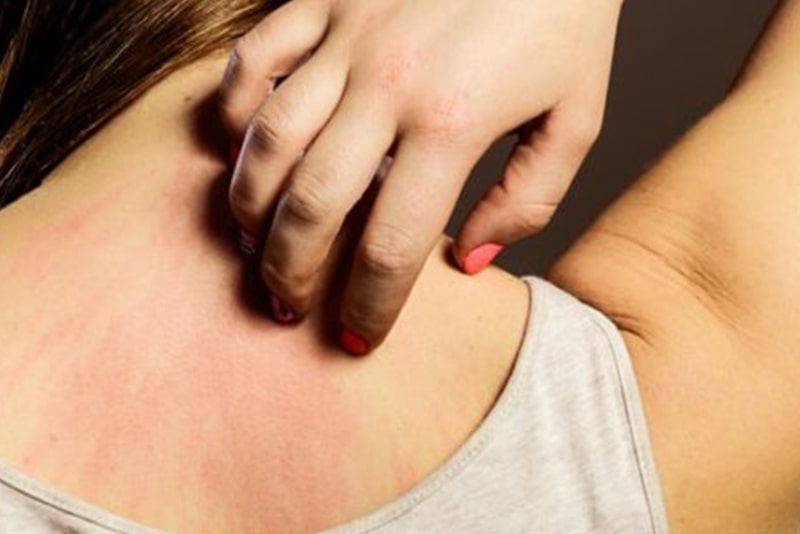
Your skin is your body’s largest and fastest-growing organ. It has many roles in the maintenance of life and health but also has many potential problems. There are many layers that make up your skin, the epidermis being the outermost. It takes about 28 days for a layer of skin to work its way up to the outer surface.
The basic day-to-day functions of the skin include:
Like the gut, the skin is home to over a trillion organisms at any given time, including thousands of species of bacteria as well as viruses and fungi. These all serve a purpose and are important for proper balance. Like the gut, when the balance is altered, it can create problems. Generally, when there is an outbreak with the skin, there is an underlying internal issue. Oftentimes the skin takes over when the liver is overloaded and cannot detoxify properly.
The skin is under constant assault from environmental agents, harsh cleansers and soaps, deodorants, and even medications and cosmetics. Our obsession with cleanliness may be doing more harm than good for microbiota balance on the skin.
A healthy skin microbiome appears to begin during and shortly after birth with a flurry of immune activity. Unfortunately, many of the modern practices surrounding birth may have a dramatic and unfortunate impact on gut bacteria. The wide use of antibiotics for mom during labor (and for mom and baby after birth) may have some big unintended consequences. This could be a part of the reason we are seeing a rise in skin-related disorders.
In conclusion, gut health is extremely important when it comes to skin issues. Almost 90% of our immune system is within the gut. Focusing on healing and nurturing your gut will usually help with certain skin issues.
Eczema
There are different forms of eczema (dermatitis) a person can suffer from, and an individual’s triggers are unique to their body. Some common forms of eczema include:
Eczema symptoms include:
The most prescribed treatment is corticosteroids which can be helpful for short term acute conditions, but doctors usually do not recommend natural remedies to try first. Doctors often do not explain how to properly use these potentially harmful medications, leading to over-prescription and accidental abuse.
Psoriasis
A chronic autoimmune condition that is a symptom of an imbalance in the gut. It causes the rapid buildup of skin cells. This buildup of cells causes scaling on the skin’s surface. Inflammation and redness around the scales are fairly common. Typical psoriatic scales are whitish-silver and develop in thick, red patches. Sometimes, these patches will crack and bleed.
Psoriasis is the result of a sped-up skin production process. Typically, skin cells grow deep in the skin and slowly rise to the surface. Eventually, they fall off. The typical life cycle of a skin cell is one month. In people with psoriasis, this production process may occur in just a few days. Because of this, skin cells don’t have time to fall off. This rapid overproduction leads to the buildup of skin cells.
Most people with psoriasis go through “cycles” of symptoms. The condition may cause severe symptoms for a few days or weeks, and then the symptoms may clear up and be almost unnoticeable. Then, in a few weeks or if made worse by a common psoriasis trigger, the condition may flare up again. Sometimes, symptoms of psoriasis disappear completely.
Natural Solutions
It is important to remember that what works for one person may not work for another, and sometimes what the skin can tolerate will change. “Natural” does not always work with people who have sensitive skin. Helpful natural treatment options include:
Acne
Acne appears when a pore in the skin clogs. This clog begins with dead skin cells. Normally, dead skin cells rise to the surface of the pore, and the body sheds the cells. When the body starts to make lots of sebum (see-bum), oil that keeps our skin from drying out, the dead skin cells can stick together inside the pore. Instead of rising to the surface, the cells become trapped inside the pore.
Sometimes bacteria that live on our skin, p. acnes, also get inside the clogged pore. Inside the pore, the bacteria have a perfect environment for multiplying very quickly. With loads of bacteria inside, the pore becomes inflamed (red and swollen). If the inflammation goes deep into the skin, an acne cyst or nodule appears.
Natural Solutions
Dry Skin
Avocado Mask – Mash ½ ripe avocado with 2 tbs honey
Coconut & Honey Mask – 2 tbs virgin coconut oil & ¼ cup honey blended
Oily Skin
Fruit Mask – 1 ripe banana, 1 tbs honey, 1 tbs lemon juice
Aloe & Honey Mask – 2 tbs aloe vera, 1 tbs honey
Combination
Avocado & Coconut Oil Mask – ½ ripe avocado & 1 tbs coconut oil
Honey & Lemon Mask – 2 tbs honey, 1 tbs lemon juice
Acne
Cucumber Mask – Blend ½ cucumber w/ 1tbs honey (1 tsp bentonite clay optional) (sit for 20 min)
ACV, Honey & Clay Mask – 1 tsp ACV, 2 tsp honey, 1 tsp clay
AFTERCARE:
After using a facemask, a sea salt spray or 1tsp ACV diluted in 1 cup cool water will work as great toners to lock-in effects.

